NBA Europe plans and the surge of international stars could prompt bookmakers to offer new markets on European franchises and London-based matches; punters may lean toward backing European teams and props on international players as the continent gains NBA prominence.
From Vancouver Island to the Global Basketball Conversation
Growing up outside basketball’s mainstream in Canada shaped a unique perspective on how the NBA lands in cities where the sport is smaller. The game’s global reach — amplified by social media and streaming — has made basketball accessible in places like London and Berlin, even if fans there are still discovering it.

Europe’s Long-Building NBA Presence
More Opportunities, Same Skillset
Europeans have long produced top talent; what’s changed is opportunity. The international pipeline has expanded since the Dream Team era, with 135 players from 43 countries in the current league. That growth is reflected in awards and star power: the last seven MVPs were born outside the US, underlining the sustained impact of overseas players.
NBA Europe: A Strategic Expansion
Concept and Practicalities
Commissioner-led proposals envision NBA Europe franchises tied to major football clubs or launched as standalone entities. A compact start — eight to 12 teams — is seen as smart and attainable, allowing time for investment, storytelling and market development without overreach.
Branding and Market Entry
While connections to established football clubs can provide instant recognition and built-in fanbases, they aren’t strictly necessary. New clubs, well-placed in marquee European cities, could also build strong followings by focusing on identity, marketing and local engagement.
London: Untapped Potential
London presents a major growth opportunity despite not being as basketball-steeped as Spain, Italy or Greece. High ticket demand for NBA exhibition games shows interest, yet professional basketball has struggled to find permanent traction. An NBA Europe franchise in London could catalyze a larger fanbase and create new commercial avenues.
Broadcasting and Fan Experience
New Approaches to Coverage
Broadcasters aiming at new territories must balance education and excitement: make the game accessible for newcomers without alienating longtime fans. Current trends favor a more conversational, behind-the-scenes tone that complements social media-driven viewing habits.
Sports Ownership and Cross-Sport Lessons
Experience in building clubs in other sports demonstrates the value of measured growth. Lessons from MLS expansion suggest starting with achievable targets, then scaling as interest and investment grow. Ownership interest in NBA Europe would be natural for those already involved in sports franchises.
Local Roots and Cultural Ties
Personal connections to London and family pedigree in football underscore the emotional pull of bringing top-level basketball to the UK. That cultural affinity, combined with commercial logic, strengthens the case for an NBA presence in major European cities.
What This Means for Basketball’s Future
The combination of increased international talent, strategic league expansion and evolving broadcast models points to a broader global footprint for basketball. For fans and stakeholders, the next phase is about building sustainable clubs, engaging local communities and creating compelling narratives that grow the sport across Europe.
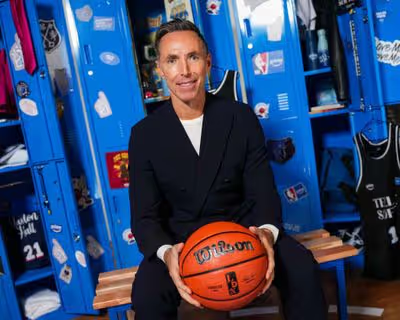
We sat down with the basketball legend at the O2 to discuss his ties to Tottenham, Vancouver, Majorca and Macclesfield. Does your background, growing up outside basketball’s mainstream on Vancouver Island with English parents, help you appreciate how people in places such as London or Berlin feel when a big NBA game comes to town? Yeah. That’s true. I didn’t watch much basketball on TV until I started playing at 13, so can relate to coming upon something new and exciting. At the same time, the world’s so small now with social media access.
But it is interesting to go to parts of the world where basketball is smaller and see how can we make the game accessible to them.Dirk Nowitzki, Tony Parker and John Amaechi were guests at the O2. But every team had a foreign player on opening night this season, with 135 players from 43 countries across the league; up from 7% in 1992 to 24% now.
Are the current Europeans different to that generation or have they just had more opportunities?
Europeans have always been quite good. It’s not like Serbia wasn’t always great at basketball but, as the game has grown, the possibilities grow. The world gets smaller with the internet and social media. There’s not as much difference; everyone has access to all the pertinent information.
Warriors' Stephen Curry makes All-Star history never done before in NBA
The NBA is more accessible nowadays to people from Europe, Africa and every corner of the world. It’s only natural that more Europeans have success in the NBA.
 The Guardian