
Eli Manning’s Hall of Fame snub likely lengthens his short‑term induction odds, making him a less attractive futures bet. Punters may pivot to first‑ballot favorites or take value on Manning in later years — or back long‑shot props on coaches like Bill Belichick getting in sooner rather than later.
Eli Manning, Belichick Among Notable Snubs from 2026 Hall of Fame Ballot
In the NFL, Bill Belichick was a headline snub from the Pro Football Hall of Fame class of 2026, and Eli Manning joined him in failing to secure enough votes this cycle. Manning, a two-time Super Bowl champion and two-time Super Bowl MVP, did not receive the threshold required for induction in his second year on the ballot.
Why the Exclusion Matters
Manning’s absence is notable because he sits among a small group of quarterbacks with multiple Super Bowl MVPs. Historically, several multi‑MVP signal-callers earned first‑year induction, which makes Manning’s exclusion conspicuous and a topic of debate among voters and analysts.
Career Numbers and Criticisms
Career critics point to Manning’s 117-117 regular-season record and a 60.3% completion rate as reasons for hesitation. Those totals compare unfavorably in voters’ eyes to some Hall of Famers, despite Manning ranking high on all‑time lists for passing yards and touchdown passes.
Playoff Peak and Signature Moments
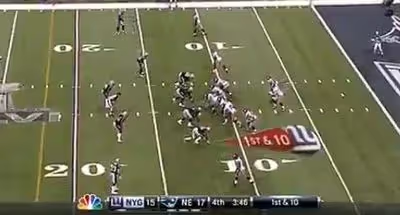
Manning’s playoff résumé is a counterweight to regular‑season criticisms. He delivered two of the most memorable Super Bowl upsets in NFL history, including the victory over a previously undefeated New England Patriots team. His postseason stretches—most notably the 2011 run—featured top marks in attempts, yards and touchdowns across the playoff games that sent the Giants to a title.
Comparisons to Past Inductees
Observers compare Manning to quarterbacks whose Hall of Fame cases rested on iconic moments as much as raw numbers. Joe Namath, for example, had a modest regular‑season record but a defining Super Bowl upset that cemented his legacy. Manning’s career includes similarly indelible plays and critical postseason performances that fuel arguments for eventual induction.
Durability and Career Milestones
Durability bolsters Manning’s case: he owns one of the longest consecutive‑start streaks in league history, trailing only a few Hall of Famers and longtime starters. He also sits inside the top tier of career passing yards and touchdown passes, statistics that typically carry weight with Hall voters.
What This Means for the Hall of Fame Picture
Manning’s failure to reach the necessary votes this year doesn’t close the door on eventual induction, but it does suggest voters remain divided over how to weigh championships and signature moments against cumulative regular‑season metrics. Other contemporaries with stronger first‑year support appear positioned ahead on future ballots.
Betting and Market Implications
From a betting perspective, this snub should change short‑term futures markets: Manning’s odds for immediate induction will lengthen, while first‑ballot favorites will firm.
Bettors seeking value might target Manning in longer-term props or monitor markets for shifting support in subsequent ballots.
Coaches and other candidates who clear divisive narratives may see their Hall odds improve in response.
Bottom Line
Eli Manning’s exclusion from this year’s Hall of Fame class is a reminder that postseason heroics and signature plays do not guarantee immediate enshrinement. The debate over how voters balance peak achievements against career averages will continue, and Manning remains a compelling name to watch on future ballots.
Super Bowl: Donald Trump Issues Controversial 'Directive' After Bad Bunny Row
Manning missed the cut for a second straight year
 Cbssports